01

Assessment progress
2-minute assessment
If you discovered that your nutrition was quietly holding ONE thing back, which would bother you the most?
Why we ask: your priority tells us which result to put first.
Be honest: how many servings of vegetables do you eat on a NORMAL day?
Why we ask: vegetable count is the single strongest predictor of micronutrient variety.
How many different COLORS of fruits and vegetables would you realistically eat during an average week?
Why we ask: color is a proxy for phytonutrient range — the same three vegetables cover the same three things.
How often do foods like spinach, kale, broccoli, asparagus or other dark green vegetables actually make it onto your plate?
Why we ask: dark greens are the densest everyday source of folate, vitamin K and manganese.
THIS IS WHERE MOST PEOPLE GET SURPRISED.
Eating vegetables occasionally and consistently covering the nutrients your body needs are two very different things.
In fact, CDC data shows that fewer than 1 in 10 American adults meet recommended vegetable intake.
And we're only getting started.
How many times per week do you deliberately eat selenium-rich foods like Brazil nuts, sardines, tuna or brussels sprouts?
Why we ask: selenium is required for proteins involved in thyroid hormone metabolism, reproduction, and antioxidant defense.
Why we're asking: Selenium is required for proteins involved in thyroid hormone metabolism, reproduction and protection against oxidative damage.
How consistently do you eat foods particularly rich in zinc: oysters/shellfish, beef, pumpkin seeds or similar foods?
Why we ask: zinc is involved in protein synthesis, cell division and wound healing — and almost nobody tracks it.
Zinc does a lot more than support your immune system. It participates in DNA and protein synthesis, cell division and wound healing, and inadequate zinc status can affect things ranging from hair to reproductive function.
When was the last time you ate liver, shiitake mushrooms, cashews or another particularly rich source of copper?
Why we ask: copper is involved in connective-tissue and iron metabolism — and almost nobody tracks it.
YOUR MACROS CAN BE PERFECT...AND THIS CAN STILL HAPPEN.
Protein. Carbs. Fat.
Those get almost all the attention.
But underneath them are trace minerals you've probably never tracked in your life.
Selenium. Copper. Zinc. Manganese. Chromium.
They aren't optional. They're involved in normal metabolic, cellular, antioxidant and reproductive processes. Selenium alone is incorporated into 25 human selenoproteins. Manganese serves as a cofactor in amino-acid, carbohydrate and cholesterol metabolism as well as antioxidant defense.
The question isn't whether you've heard of them.
It's whether you're consistently getting them.
How frequently do you eat strong natural sources of vitamin B12 like quinoa, cottage cheese, clams, meat, eggs or dairy?
Why we ask: B12 supports nervous-system and red-blood-cell function. Plant-forward diets are its most common blind spot.
How often do lentils/beans, cabbage, artichoke, avocado or other folate-rich plants show up in your diet?
Why we ask: folate supports cell division and comes primarily from plant foods.
How often do you eat a meaningful serving of vitamin-C-rich foods such as bell peppers, kiwi, citrus or strawberries?
Why we ask: vitamin C is required for collagen synthesis and comes primarily from plant foods.
Vitamin C isn't just an "immune vitamin."
Your body requires it to make collagen, the structural protein used throughout connective tissue, and vitamin C also improves absorption of non-heme iron.
That ties an ordinary vitamin directly to skin/appearance/joint-supportive connective tissue biology.
Your body requires it to make collagen, the structural protein used throughout connective tissue, and vitamin C also improves absorption of non-heme iron.
That ties an ordinary vitamin directly to skin/appearance/joint-supportive connective tissue biology.
How repetitive is your diet?
Why we ask: a diet that rotates 5–8 foods covers 5–8 foods' worth of nutrients — no matter how clean they are.
On your busiest days, what usually happens to your nutrition?
Why we ask: coverage is decided on your worst days, not your best.
HERE'S THE TRAP FIT PEOPLE FALL INTO.
You can hit:
180 grams of protein.
Your exact calories.
Your creatine.
Your workout.
...and still have absolutely no idea how much selenium, copper, folate, vitamin E or manganese you consumed today.
Being disciplined doesn't automatically mean being nutritionally complete.
How often do you hit a noticeable drop in energy during the day even when you've eaten enough calories?
Why we ask: daily energy patterns help us put your dietary coverage into context.
Compared to how you think you SHOULD feel, how would you describe your workout energy and recovery lately?
Why we ask: workout energy and recovery help show where inconsistent nutrition may matter most.
How often do you experience that frustrating "brain fog" feeling: difficulty concentrating, mentally fading or simply not feeling as sharp as you'd like?
Why we ask: mental sharpness is one supporting signal we compare with your dietary variety.
Have you noticed any of these becoming more frustrating recently?
- Hair looks thinner or sheds more than I'd like
- Skin doesn't look as healthy or vibrant as I'd like
- Small cuts or skin irritation seem slow to settle down
- Nails seem weaker or more brittle
Why we ask: appearance changes can have many causes, so we treat them only as supporting context.
Compared with YOUR normal baseline, how would you rate your sex drive and overall physical drive?
Why we ask: overall physical drive has many influences; nutrition is only one part of the machinery.
Nutrition isn't the only thing that affects hormones. Not even close.
But adequate micronutrient status is still part of the machinery. Selenium is involved in reproduction, and human research has linked zinc status with testosterone particularly in zinc-deficient men. That does not mean extra zinc acts like a testosterone booster when zinc status is already adequate.
But adequate micronutrient status is still part of the machinery. Selenium is involved in reproduction, and human research has linked zinc status with testosterone particularly in zinc-deficient men. That does not mean extra zinc acts like a testosterone booster when zinc status is already adequate.
How often do digestion issues get your attention: bloating, irregularity, feeling overly full or just feeling like your stomach isn't operating as smoothly as you'd like?
Why we ask: nutrition depends on what your daily routine and digestion allow you to consistently use.
How often does stress leave you feeling mentally or physically "wired but drained"?
Why we ask: stress is not a micronutrient diagnosis; it helps us understand your recovery context.
Do you currently do anything EVERY DAY specifically to cover the micronutrients your food might miss?
Why we ask: daily habits tell us more about consistency than something taken occasionally.
Before taking this assessment, how confident were you that you were covering ALL of these nutritional bases consistently?
Why we ask: comparing your confidence with your answers makes the final result more meaningful.
INTERESTING.
Now let's see what your answers actually show.
ANALYZING YOUR ANSWERS
- Analyzing your food diversity... ✓
- Checking trace-mineral coverage... ✓
- Analyzing vitamin coverage... ✓
- Checking energy & performance signals... ✓
- Analyzing appearance & connective-tissue signals... ✓
- Checking mental-performance signals... ✓
- Calculating your Nutrient Coverage Score... ✓
YOUR RESULTS ARE READY
YOUR NUTRIENT COVERAGE RISK SCORE
0
/ 100
NUTRIENT COVERAGE RISK SCORE
02
03
YOUR NUTRITION ACTION PLAN
SO WHAT DO YOU DO ABOUT IT?
You could start tracking every micronutrient you consume.
You could make sure you're eating Brazil nuts for selenium.
Shellfish or pumpkin seeds for zinc.
Liver, oysters, mushrooms or cashews for copper.
Leafy greens and legumes for folate.
Bell peppers and kiwi for vitamin C.
Enough variety to cover the B vitamins.
Enough fruits and vegetables to provide the plant compounds your chicken-and-rice diet isn't giving you.
And honestly...I'd rather you did.
04
THE REALITY CHECK
YOUR NUTRITION PLAN HAS TO WORK ON YOUR WORST DAYS.
There are going to be busy days. Travel days. Chicken-and-rice days. Days when the vegetable on your plate is an afterthought.
And you shouldn't have to wonder:
“What did I miss today?”
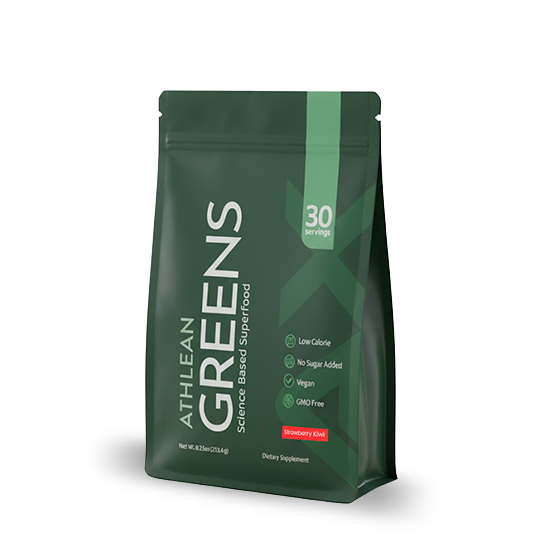
That's why I created ATHLEAN Greens.
ATHLEAN GREENS
ONE SCOOP. A MUCH STRONGER NUTRITIONAL SAFETY NET.
ATHLEAN Greens combines vitamins, minerals, antioxidants, probiotics, digestive support and 30+ superfoods into something you can actually look forward to drinking every day. The current product is offered in Appletini, Peach Mango and Strawberry Kiwi.
It's not a replacement for eating vegetables.
It's how I make leaving gaps in my nutrition a hell of a lot harder.
CHOOSE MY SUPPLY & FLAVORSChoose 1, 3 or 5 bags and mix any available flavors.
YOUR ONE-SCOOP
NUTRITION SAFETY NET.
- 30+Superfoods
- Vitamins& Minerals
- ProbioticSupport
- 3Flavors
No blood test required. This assessment evaluates dietary patterns and common signs that may indicate where your nutrition coverage is weakest. It is not a medical diagnosis.